


From the Pitch to the Economy: What Cape Verde's World Cup Qualification Teaches the Country About Ambition and Performance
Cape Verde has just achieved a historic feat: securing qualification for the 2026 FIFA World Cup. A small archipelago of just over half a million inhabitants, located in the Atlantic, has earned a place among the world's greatest football nations.
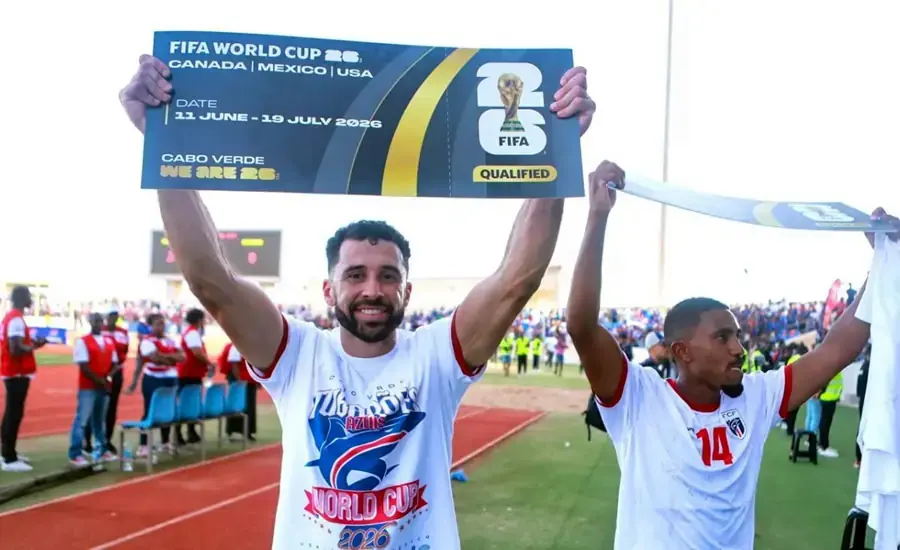
The sporting and emotional impact of this achievement is evident—but there is something even deeper and more relevant: what can this event teach Cape Verde's economy and businesses about strategy, ambition, and resilience?
1. Sport as a Mirror of the Economy
Football is, in many ways, a microcosm of society and the economy. No team reaches a World Cup by chance. There is a process that combines vision, planning, talent, and disciplined execution.
Behind Cape Verde's qualification lies a story of consistent work, investment in training, professionalization, and collective spirit. These are precisely the ingredients that also define the economic success of any country.
Just as a coaching staff devises a tactical plan for each match, businesses and institutions also need clear and coherent strategies, based on data, objectives, and a culture of continuous improvement. The ability to learn from defeats, correct mistakes, and maintain cohesion even in difficult moments is a lesson that applies equally in a locker room and in a business organization.
2. Small Country, Big Results: The Power of Efficiency
Cape Verde does not have the human, financial, or logistical resources of many of its African counterparts. However, it has demonstrated that scale does not define potential when there is efficiency, cohesion, and strategic intelligence. This lesson is central for small, open economies: competitive advantage lies not in size, but in the ability to choose wisely where to compete and how to use available resources.
In football, Cape Verde knew how to invest in training, leverage diaspora talent, and create a solid tactical identity. In the economy, the reasoning is identical: the country must focus on niches of excellence, such as sustainable tourism, renewable energy, the blue economy, digitalization, and regional financial services. In all these areas, success depends on the same logic of collective play and tactical discipline that leads a national team to defeat theoretically stronger opponents.
3. Human Capital as the Primary Asset
A World Cup is not won only with individual talent, but with a structure that values and develops people. Sport shows us the power of continuous training, meritocracy, and collective motivation—principles that the business sector needs to incorporate more deeply.
In a competitive global economic context, Cape Verde's true "natural resource" is human talent. Investing in technical qualifications, innovation, and entrepreneurship is equivalent to training a new generation of players prepared for the global stage.
4. Public and Private Sectors: Lessons in Leadership and Ambition
Qualification for the World Cup is also a case study in leadership and long-term vision.
In the public sector, it demonstrates the importance of consistent policies, institutional continuity, and commitment to projects that transcend electoral cycles. This is the same principle that allows for the creation of a predictable and attractive business environment for investment.
In the private sector, the message is clear: if Cape Verde can compete and win in world football, it can also assert itself in international markets, exporting knowledge, products, and services.
Sporting success should inspire businesses to think globally, to invest in quality, innovation, and professional management, and to cultivate the same team spirit that united a nation around a common goal.
5. The Power of Soft Power and the Cape Verde Brand
Sport is a powerful tool for international projection. Cape Verde's visibility at the World Cup can strengthen its nation brand, opening doors for tourism, culture, and foreign investment.
Countries like Iceland and Croatia have transformed sporting achievements into lasting economic and reputational boosts. For Cape Verde, this is a golden opportunity to associate its image with values of resilience, professionalism, and global ambition.
6. Conclusion – From Dream to National Strategy
Qualification for the World Cup is much more than a sporting victory. It is a practical demonstration that greatness does not depend on size, but on vision. If the country can transfer the same team spirit, discipline, and confidence that took the "Blue Sharks" to the World Cup into its economic fabric, then the future can be equally promising off the pitch.
The challenge now is simple, yet demanding: transform the emotion of the moment into a strategy of national ambition, where success in sport becomes a model of inspiration for the public sector, the private sector, and all of Cape Verdean society.
Cape Verde has shown the world that it knows how to compete with the best. It is now up to us to prove that we also know how to grow, innovate, and win—on the field of economics.
Listen to the full episode on this topic (Link).


Comments